
Kate McBrearty: Symposium of World Association of Ethnic Minority Theatres
At the request of the author, Kate McBrearty, we are publishing the original English text containing the Irish passages, which was delivered at a conference dedicated to the theatres of national, linguistic and ethnic minorities on May 4, 2026, at the National Theatre, Budapest.
1. What are the defining characteristics of your theatre’s present situation and experience? This may relate to linguistic and cultural context, artistic practice, community environment, or institutional circumstances.
2. What forms of collaboration or international exchange would be most meaningful for you at this moment? This may include—among others—educational cooperation, participation in festivals or touring networks, co-productions, joint funding initiatives, or ongoing professional platforms.
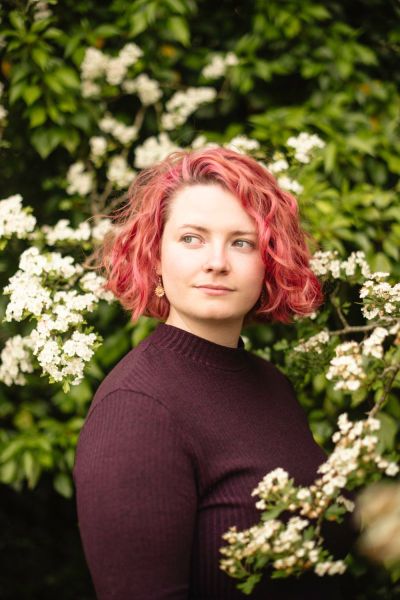
Dia dhaoibh go léir ar maidin, tá sé go hálainn a bheith anseo. Good morning everybody, it’s lovely to be here. My name is Kate McBrearty and I am a producer in An Taibhdhearc.
An Taibhdhearc, Amharclann Náisiúnta na Gaeilge is Ireland's National Irish Language Theatre. Founded in 1928, our mission is to provide high-quality professional theatre experiences for audiences in our venue in Galway as well as touring nationally, including to Gaeltachtaí (Irish-speaking regions) and to the North of Ireland. An Taibhdhearc produces Irish-language theatre and events, and platforms artists making work in Irish. Our inaugural artist development programme, Taibhsín, includes 5 artists-in-residence and 8 seed bursaries.
Funding for An Taibhdhearc comes directly from the Department of Community and Rural Development and Gaeltacht. A funding package of €5.7million was announced in 2024 to sustain the theatre and allow it to become a production house as well as a receiving house between 2025-2027. We have a whole new team, who began in January. We produce 5 shows a year in a programme which includes a mix of contemporary and classical productions, as well as a show in the community. We aim to represent all dialects of Irish in our programme, and tour to all parts of the country, including the North, which is still part of the United Kingdom.
It is important to us at An Taibhdhearc not only to produce shows in our home venue, but to bring these productions to Gaeltachtaí and to other parts of the country. This year, we brought Dathanna Geala Amháin to the Gaeltacht in Donegal, to Castlebar Co. Mayo, to Dublin, and to Belfast. It was especially important to us to go to Belfast as the show is written from a Belfast perspective, and as the National Irish Language Theatre, we want to represent and service all of Ireland, including the 6 counties, where there is so much recent political history with the language.
We aim to represent all dialects of the language. Dathanna Geala Amháin was performed in Ulster Irish, whereas Beckett sa Chreig: Guth na mBan was performed in Munster Irish. Our Christmas show, An Fathach Leithleasach and our show in the community, Seó Linn featured Conamara Irish. We have plans to represent the Meath and Mayo Gaeltachtaí too. During our Culture Night performance this year, Titim na hOíche, we programmed a local choir who sang in 5 different languages - Xhosa, Zulu Japanese, Bulgarian, and of course, Irish.
Although Irish is a mandatory subject in school, it is not very widely spoken. Thanks to recent cultural moments, there is a renewed interest in the language. Bands like Kneecap and movies like An Cailín Ciúin have helped people realise that Irish is not just a school subject, it is a living language and part of our identity and heritage. It has been interesting to talk to audiences during the year about their level of Irish. Many audience members bought tickets and used the language access we had to offer (surtitles, audio access, Sibrwd), thinking they wouldn’t be able to understand or enjoy the show without it, but oftentimes they knew more than they thought they did. The access gave them the confidence and support they needed to make contact with the language and many stopped using the access provisions during the show and enjoyed watching the show in Irish, whether they understood every single word or not.
We have reached non-Irish speakers throughout the year by providing various forms of access to the language. During Dathanna Geala Amháin, we made surtitles a part of the show. During Beckett sa Chreig: Guth na mBan, we had headsets available through which the audience heard the actors performing the English language verison of the script, cued live to keep the timing as close to the live performance as possible. For An Fathach Leithleasach, we used an app called Sibrwd, developed by our friends at Theatr Cymru, and it has been amazing. It is possible to have captioning in multiple languages and the audience can choose which they need. For An Fathach Leithleasach, we had captioning available in Irish and in English.
In terms of international exchange, we would like to see the Irish language on the global stage at international festivals, to show that if excellent theatre can be made in English, or indeed in other majority languages, why not in Irish or in other minority languages?
Go raibh míle maith agaibh go léir as éisteacht liom. Thank you so much for listening
(31 August 2026)